
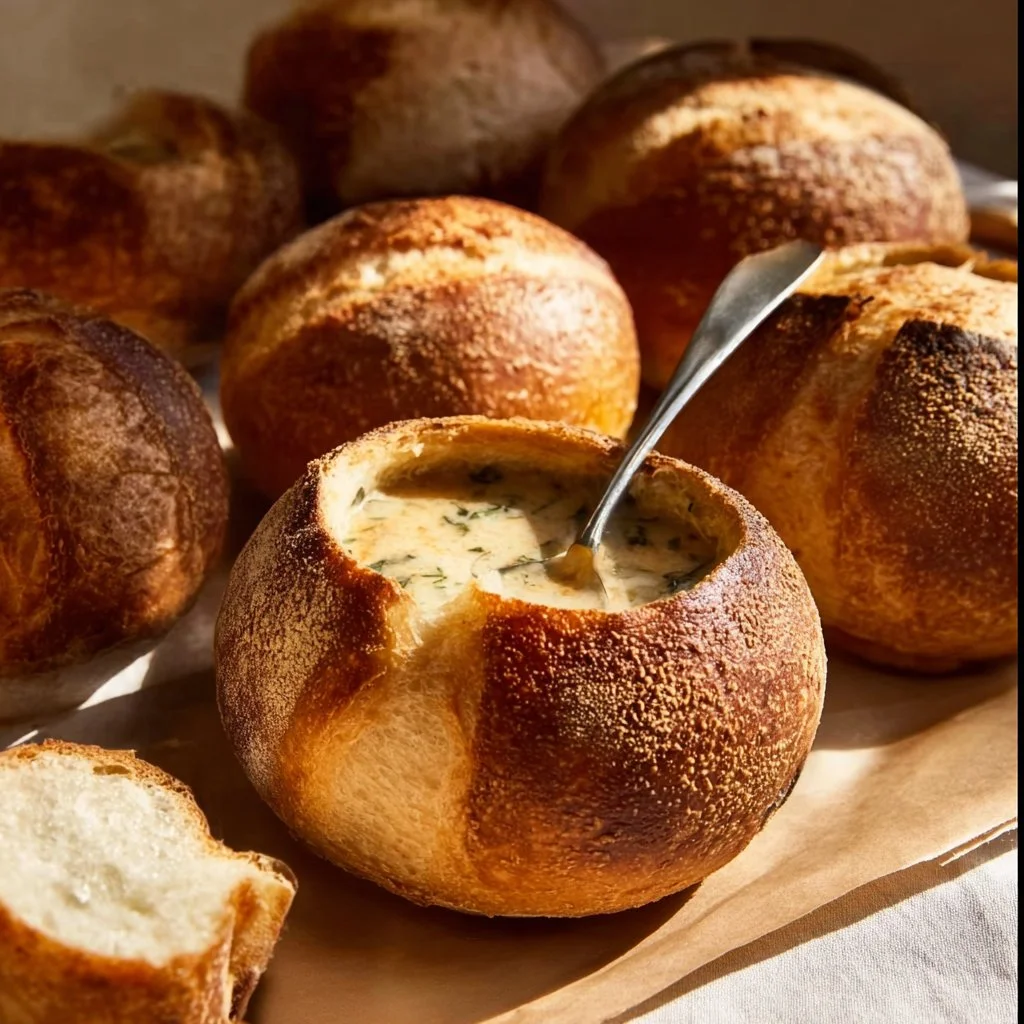
Picture a cold afternoon, the oven humming softly as the kitchen fills with the warm, tangy perfume of sourdough, the crust crackling when you tap it, steam curling from a bowl hollowed and filled with creamy soup. Sourdough Bread Bowls make any meal feel like a small celebration, perfect for family dinners, cozy gatherings, or a weekend lunch that deserves a little ceremony. If you want ideas for what to dip into these bowls, my post on bread and cheese pairings is a lovely companion that highlights flavors that pair beautifully with crusty bread.
What Makes This Special
Sourdough Bread Bowls bring texture and flavor together in a way a plain bowl can never match, the tang of the starter brightening savory fillings while the thick crust holds up to hearty stews and creamy chowders. They are tactile and comforting, the contrast between a crisp exterior and a soft, slightly chewey interior creating a satisfying bite that carries soup, chili, or even a warm dip.
They also elevate presentation with minimal effort, turning an ordinary meal into something memorable. Benefits include
- Bread becomes part of the course, reducing dishwashing
- The crust protects against soggy bottoms, keeping soups hotter longer
- Hollowing the bread creates an edible vessel that guests love to tear into
Ingredients and Key Notes
A successful sourdough bread bowl relies on an active starter, the right hydration, and a strong dough that can be shaped and hold structure. You can use a bit more or less water to adjust dough feel, and bread flour gives a high gluten content that helps the bowls keep their shape and develop a crisp crust.
- 1/2 cup sourdough starter, active and bubbly (100g)
- 2 cups filtered water (480g)
- 2 tbs granulated sugar (30g)
- 1/4 cup olive oil (55g)
- 7 cups bread flour (840g)
- 1 tsp salt (8g)
- 1 large egg
- 1 tbs filtered water
Notes, use a mature starter that doubles predictably, and weight ingredients where possible for consistent results. If your starter is sluggish, feed it 4 to 6 hours before you plan to mix.
Bringing It Together
- Make the Dough, In a large bowl combine the active starter, filtered water, and sugar until the starter dissolves, then stir in the olive oil and most of the bread flour to form a shaggy dough, you should smell a mild tang and see strands of flour coming together.
- Strengthen the Dough, Add the salt and knead by hand or with a stand mixer on low for 8 to 10 minutes until the dough is smooth and elastic, it should pass a gentle windowpane test and feel springy to the touch.
- Bulk Fermentation, Place the dough in an oiled bowl, cover, and let it rise for 4 to 6 hours at room temperature, folding the dough every 30 to 60 minutes during the first two hours to build strength, you will notice it increase in volume and become aerated.
- Shape The Bowls, Turn the dough onto a floured surface, divide into 6 to 8 equal pieces depending on desired bowl size, shape each piece into a tight round by cupping and rolling it, the surface should be taut and smooth.
- Second Rise, Place shaped rounds on a parchment lined tray, cover lightly and let them puff for 1 to 1 1/2 hours until slightly jiggly and airy, a gentle poke should slowly spring back.
- Bake The Bowls, Preheat the oven to 475 F, score the tops if you like, and bake the loaves with steam for 12 minutes then lower the oven to 425 F and bake another 12 to 18 minutes until deep golden and the internal temperature reads about 205 F, the crust will be richly browned and crackly.
- Cool The Bowls, Let the loaves cool completely on a rack for at least 30 minutes so the crumb sets, then hollow the centers by cutting a lid and scooping out the interior, the leftover crumbs make lovely croutons or stuffing.
Prep ~60 minutes active, Cook ~35 minutes, Total ~18 hours including fermentation, Servings ~6 to 8 bowls, Kcal ~420 per serving.
Plan Ahead
Sourdough benefits from time, and many steps can be shifted to suit your schedule. You can mix and bulk ferment the dough in the evening, then refrigerate it overnight for a slow long ferment, this deepens flavor and makes shaping easier the next day. Shaped bowls can proof in the fridge for 8 to 18 hours, then come to room temperature while the oven heats.
For quicker prep, use a warm, draft free spot to shorten proofing times, or prepare the dough one day and finish the shaping and baking on the day you plan to serve. If you want to fully prepare early, bake the bowls, cool, and then freeze them unfilled, simply thaw and warm before adding hot soup.
How to Store Leftovers
Refrigerate cut and filled bread bowls not more than two hours after serving, wrap leftovers in foil or an airtight container and store in the fridge for up to 3 days. For longer keeping, freeze whole baked bowls or the scooped interior for up to 3 months, wrap tightly in plastic and then foil to prevent freezer burn.
Reheat gently to refresh texture, for filled bowls warm in a 350 F oven for 12 to 20 minutes until the filling is hot and the bread is crisp again, if reheating frozen bowls thaw in the fridge overnight first. A freshness cue is a crisp, resonant crust and a slightly tangy aroma, stale bread loses that bright sour smell and becomes soft to the touch.
Serving Ideas
Perfect Pairings
- Classic clam chowder or creamy potato leek soup
- Hearty beef and vegetable stew
- Spicy chili topped with cheddar and scallions
- Warm spinach and artichoke dip served for sharing
- Creamy tomato basil soup with a drizzle of olive oil
In each case, the bowl adds both flavor and drama, and the scooped interior can be toasted for croutons.
For a lighter, soft filling idea that complements the tang of the sourdough, try a cottage cheese based filling inspired by cottage cheese bread recipes, it brings a gentle creaminess and bright acidity that balances rich soups.
Make It Your Own
Variations and Swaps
- Whole Wheat Blend, Replace up to two cups of the bread flour with whole wheat for a nuttier flavor, increase hydration slightly since whole wheat absorbs more water.
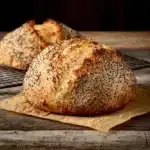
- Seeded Crust, Press sesame, poppy, or sunflower seeds onto the dough after brushing the tops with egg wash for extra texture and a toasty note.
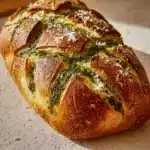
- Garlic Herb Bowls, Fold finely minced roasted garlic and chopped herbs into the dough for aromatic bowls that pair especially well with creamy dips.
- Cheese Filled Rim, Press grated hard cheese like Parmesan or aged cheddar around the rim before baking, it melts and crisps into a savory collar.
- Mini Bowls, Divide the dough into more pieces for smaller, individual soup bowls, these are perfect for appetizers or a soup tasting.
- Savory Swaps, When a recipe calls for bacon, swap in turkey bacon for a lighter, leaner touch, or use cooked ground chicken in hearty, meat forward fillings.
- Sweet Version, Add a tablespoon of honey and a pinch of cinnamon to the dough, fill with warm fruit compote and a dollop of mascarpone for a dessert twist.
None of these variations require alcohol or pork, and they keep the bowl versatile for many menus.
Cook’s Notes and Secrets
Pro Tips for Best Results
- Temperature Matters, Aim for a dough temperature around 75 F to encourage a steady ferment, warmer temperatures speed fermentation while cooler slows it.
- Give It Time, Longer, slower ferments yield more complex flavor, refrigerate during bulk fermentation for a gentler rise and deeper tang.
- Steam for Crust, Create steam in the first 12 to 15 minutes of baking, this helps the crust expand and become glossy and crisp.
- Watch Texture, The dough should feel smooth and slightly tacky, not sticky, if it clings to your fingers add a touch more flour, if it feels dry add a splash of water.
- Internal Temperature, For fully baked bread aim for an internal reading around 205 F to ensure the crumb is set, use an instant read thermometer for accuracy.
- Cooling Is Essential, Allow loaves to cool fully before hollowing to prevent gummy interiors, cooling sets the crumb and improves texture.
Your Questions, Answered
Frequently Asked Questions
What starter do I use, and how active should it be?
Use a mature sourdough starter that reliably doubles in volume after a feed, it should be bubbly and fragrant when you mix. A lively starter gives the dough lift and that characteristic tang that defines sourdough.
Can I make these without a sourdough starter?
You can adapt the method using commercial yeast for a quicker rise, however the flavor and texture will differ, sourdough gives a depth of flavor and a chewier crumb that commercial yeast cannot fully replicate.
How large should each bowl be for serving soup?
Divide the dough so each portion yields a loaf roughly 4 to 5 inches wide for single servings, make larger bowls by dividing into fewer pieces if you want bowls suitable for sharing. The size you choose changes bake time slightly, so watch for deep golden color and an internal temp around 205 F.
What if my dough is too sticky to shape?
Dust your hands and work surface lightly with flour and use a bench scraper to help move the dough, a sticky dough often means higher hydration which can be managed with additional folding rather than too much flour, this preserves crumb openness.
How long do baked bread bowls stay good at room temperature?
Unfilled baked bowls can stay at room temperature for 1 to 2 days if kept in a paper bag or loosely wrapped to preserve crispness, fill them only when you are ready to serve for best texture.
Can I hollow the bowls ahead of time?
Yes you can hollow them and store the scooped interior in the fridge for a day or freeze for longer keeping, wrap the hollowed shells in plastic if you need to store them before filling to maintain moisture levels.
Why did my bread bowl collapse when I filled it with soup?
Collapse usually happens if the loaf was not fully cooled before hollowing, or if the walls were scooped too thin, let the loaf cool fully and leave at least a 3 quarter inch wall when carving for structure.
How do I keep crust crisp when serving filled bowls?
Serve immediately after filling, or briefly rewarm in a hot oven for a few minutes to crisp the crust, avoid covering filled bowls which traps steam and softens the crust.
Final Thoughts
Sourdough Bread Bowls invite a slow, generous style of cooking and serving, they turn soup into an event and make weeknight dinners feel special without a lot of fuss. The ritual of breaking a crust and mopping up the last spoonful with warm bread is one of those small pleasures that brings people together, so give this recipe a try and enjoy the scent, texture, and comfort of homemade sourdough bowls soon.
Print
Sourdough Bread Bowls
- Total Time: 1080 minutes
- Yield: 6 to 8 bowls 1x
- Diet: Vegetarian
Description
Delicious, crusty sourdough bread bowls perfect for holding soups, stews, or warm dips.
Ingredients
- 1/2 cup sourdough starter, active and bubbly (100g)
- 2 cups filtered water (480g)
- 2 tablespoons granulated sugar (30g)
- 1/4 cup olive oil (55g)
- 7 cups bread flour (840g)
- 1 teaspoon salt (8g)
- 1 large egg
- 1 tablespoon filtered water
Instructions
- In a large bowl, combine the active starter, filtered water, and sugar until the starter dissolves. Stir in the olive oil and most of the bread flour to form a shaggy dough.
- Add salt and knead by hand or with a stand mixer on low for 8 to 10 minutes until the dough is smooth and elastic.
- Place the dough in an oiled bowl, cover, and let it rise for 4 to 6 hours at room temperature, folding every 30 to 60 minutes during the first two hours.
- Turn the dough onto a floured surface, divide into 6 to 8 pieces, and shape each piece into a tight round.
- Place shaped rounds on a parchment lined tray, cover lightly, and let them puff for 1 to 1 1/2 hours.
- Preheat the oven to 475°F, score the tops, and bake for 12 minutes with steam, then lower to 425°F and bake another 12 to 18 minutes until golden and internal temp reaches 205°F.
- Let the loaves cool completely on a rack for at least 30 minutes, then hollow the centers by cutting a lid and scooping out the interior.
Notes
Use a mature starter that doubles predictably. If your starter is sluggish, feed it 4 to 6 hours before mixing. For quicker prep, use a warm, draft-free spot to shorten proofing times.
- Prep Time: 60 minutes
- Cook Time: 35 minutes
- Category: Bread
- Method: Baking
- Cuisine: American
Nutrition
- Serving Size: 1 bowl
- Calories: 420
- Sugar: 4g
- Sodium: 400mg
- Fat: 14g
- Saturated Fat: 2g
- Unsaturated Fat: 10g
- Trans Fat: 0g
- Carbohydrates: 64g
- Fiber: 3g
- Protein: 13g
- Cholesterol: 60mg
Keywords: sourdough, bread bowls, soup, homemade bread